Accelerating the frontier of Crypto Innovation – Abdul Al Ali, Venture Investor, at Decasonic
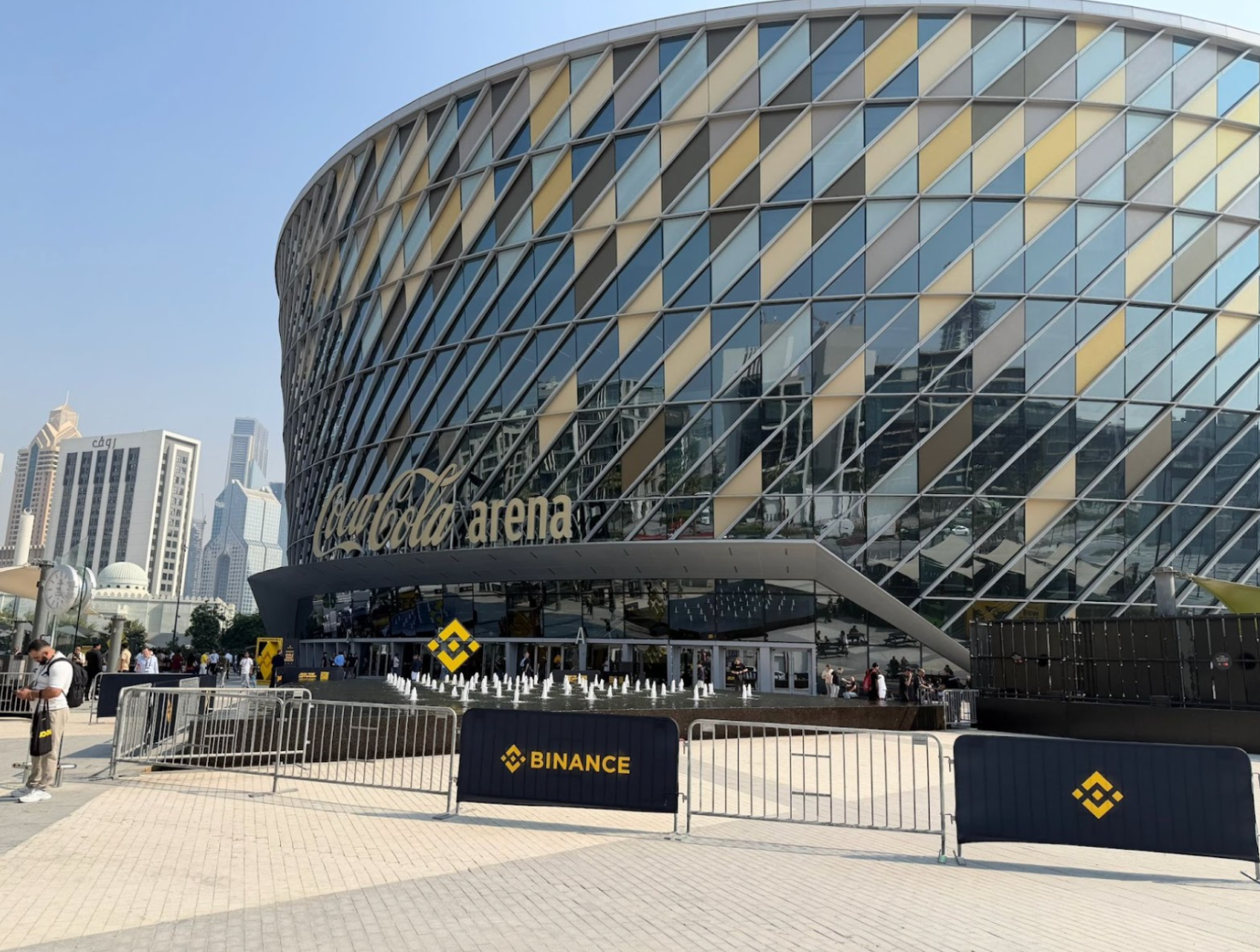
The primary theme for BNB Blockchain Week in Dubai for 2025 centered on acceleration of crypto innovation across multiple fronts, frontier market sectors, and geographic regions. It brought together an impressive mix of geographically-distributed founders, operators, and capital allocators. The three key themes that stood out across from panels (main and side events), YZi Labs Cohort (residency program), and conversations (professional) centered on:
- Acceleration of Institutional Adoption: Key highlight of the event, with founders, allocators, and operators noting the continued accelerating pace of institutional, enterprise, and sovereign capital adoption and deployment into crypto markets.
- Agentic Commerce: Builders and ecosystem foundations are laying the core infrastructure (plumbing) for the agentic economy in real-time. This involves payments, identities, registration, integrations, and cross-chain adoption towards a sovereign system of economic actors on-chain.
- Maturity: Crypto has matured. In the face of increasing acceleration of institutional adoption, there is more than ever an emphasis on fundamental-driven adoption. This is an area that we have been actively guiding our portfolio companies for since Day 1 at Decasonic.
As of the writing of this article, Binance achieved a significant regulatory milestone in MENA (primarily in Abu Dhabi), with the CEX becoming the first global exchange fully licensed by ADGM’s (Abu Dhabi Global Market) FSRA (Financial Services Regulatory Authority). This license covers an exchange, clearing and custody house, and a broker-dealer entity. Impressive milestone by the Binance team, and they will migrate their headquarters to Abu Dhabi in the process.
It was pleasantly surprising to see the wide-spread attendance of cross-chain ecosystem ambassadors, including key leaders from Solana, XRP, Ethereum, Bitcoin, and other ecosystems given the headline of BNB and Binance. It is increasingly obvious that some key forces in crypto are united on the regulatory front, with the key goal of maintaining the advancements and strides the industry has made with regulators while advancing them forward.
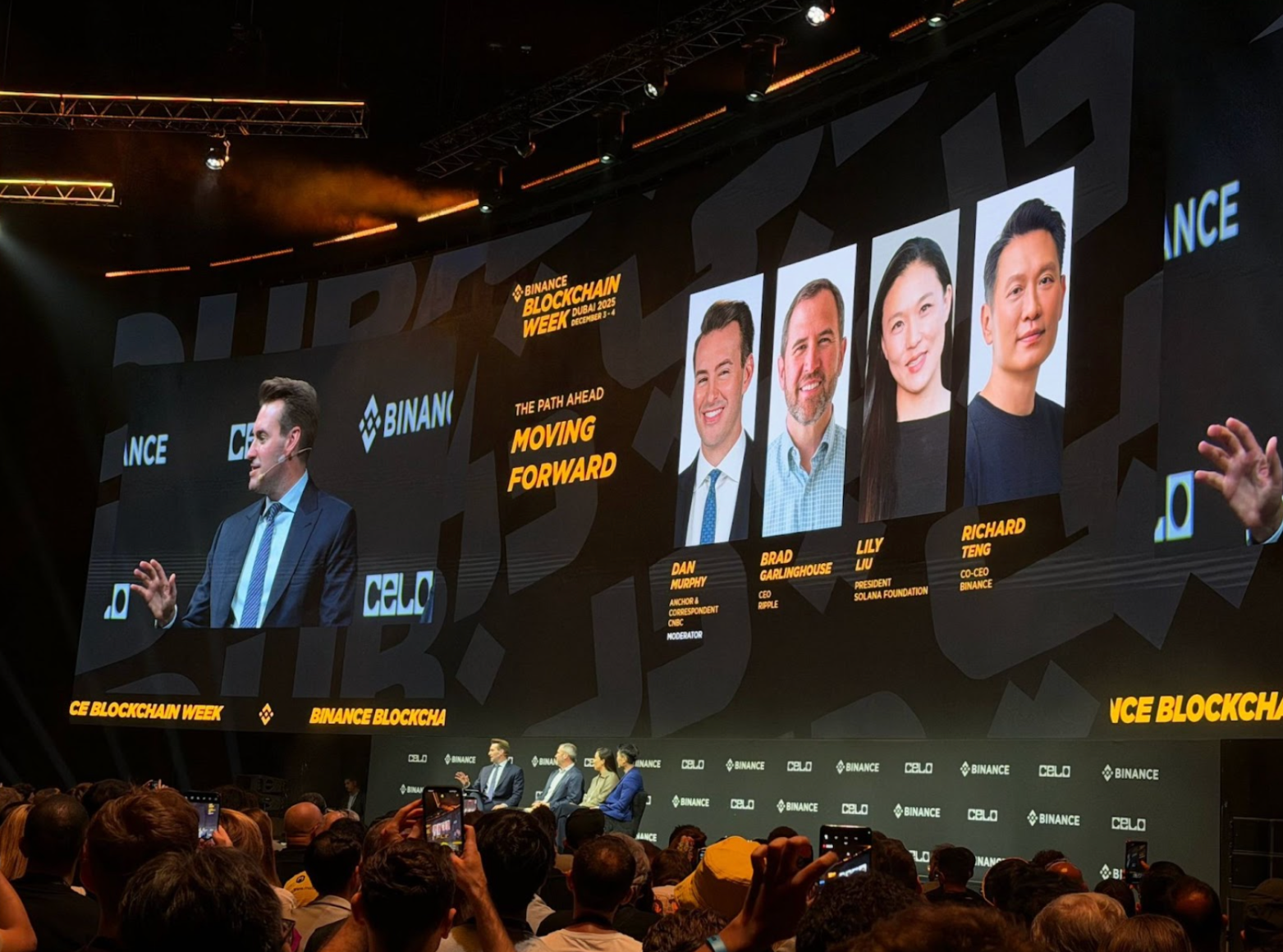
Panel Name: “The Path Ahead: Moving Forward” with Lily Liu, Richard Teng, and Brad GarlingHouse
The UAE continues to cement its position as one of the most forward-adopting, pro-regulatory and pro-innovation countries for crypto (and increasingly for AI). With every vision of mine to the country, the density of the crypto talent who call the region their home continues to increase. The regulatory progress, the proximity to capital access and liquidity, and the sandbox environment that allows for experimentation and scaled deployment of innovation continues to be a differentiator for many builders, operators, and capital allocators.
We previously shared some shortened key takeaways from the trip here: X (D1, D2) and LinkedIn, below we will explore 6 themes in depth from the event.
Fundamentals: Accelerating Innovation in the Face of Macroeconomic Conditions
A strong consensus was that the recent crypto-market movements (price weakness) is not a reflection of weakening fundamentals or adoption. Rather, the current state stems primarily from short-term macroeconomic uncertainty and the nature of deleveraging cycles (with a number of individuals/operators pointing towards the Yen carry trade, year end tax loss harvesting, and the four year cycle). This provides short-term noise in a structurally sound market that is accelerating on its adoption curve and rate of innovation.
Institutional demand remains intact, with family offices globally (with a specific focus on MENA and APAC) actively being onboarded to crypto. Enterprises, including DAT operators continue to navigate the landscape of capital deployment, with an increasing focus on differentiation through on-chain capital deployment (whether done externally or through internal developments). CZ, a mentor at the Yzi Labs Residency Program, emphasized that projects and builders should increasingly focus on fundamentals (adoption metrics, user growth, and pathway to monetization). Durable value comes (naturally) from products that accelerate onboarding, demonstrate stickiness in user activity, and offer pathways towards aggressive scale in monetization. Teams that ship, projects that continue to build, and tokens that are designed with network effects will continue to sustain in a fundamentals-driven market.
Regulatory Clarity: Accelerating Regulatory Clarity in the Face of Fragmentation
Key regulatory advancements was another primary recurring anchor throughout the week. Clarity is improving across regions, and there is a race between regions (and countries) to win over a community of builders, ecosystems, and alternative asset capital allocators. Despite the rapid improvements we have seen, fragmentation between regions remains a bottleneck (and a costly one for many teams working across borders).
In listening to many discussions on the advancements in crypto regulatory adoption/clarity, the question of AI clarity emerged. This primarily boiled down to AI agents, and who should hold the liability in the case of mis-step or misactions (including interacting with blacklisted contracts, potential draining of funds) by those agents? Founders and policy makers might have to actively prepare for the key distinctions between custodial and non-custodial agents as agents become economic actors with their own identity, passport, and smart-contract wallets. As crypto and AI adoption continue to gain clarity and momentum in parallel, we believe the next emergence of regulatory clarity will be at the intersection of the two technologies and the agentic question is one to consider.
Tokenizing Everything: Accelerating ICM
Tom Lee, otherwise known as fundstrat on X, is the chairman of the single-largest Ethereum DAT (BitMine). As of the writing of this article, BitMine currently owns ~3.864M ETH, bringing their ownership share to nearly ~3.2% of the ETH supply. One key insight shared from Tom during his panel was an emphasis on factorizing businesses. Rather than tokenizing assets on an individual basis, investors can gain exposure to specific cash-flow components of those assets, including but not limited to (time-based revenue slices, product-level income, geographic NPVs, or other granular metrics). While not explicitly referred to as “ICM” during his discussion, this aggressively mirrors an area of significant recent adoption in crypto, ICM.
Tokenization is increasingly moving up the stack with deeper integration. If there was one area of crypto where the strongest consensus emerged (aside from stablecoins), it’s the adoption in tokenization. The interest in factorizing businesses will accelerate the adoption of tokenization.
Agentic Commerce: Accelerating the Foundational Economy
One key area we are incredibly excited about at Decasonic is the emergence of the Agentic Economy. The next phase of on-chain adoption will come from agents, acting on behalf of their respective human-counterparts or as sovereign, economic actors. By 2026, we expect at least ~5% of the on-chain transactions to be made by AI agents. The pathway towards the agentic economy is being built in-real time. As it stands, the current landscape of Web3 x AI is a fragmentation of value-add services in service of the agentic economy, with various frameworks and implementations that might not be compatible with each other. Some teams, including the Virtuals Protocol team are building the comprehensive-stack solution through ACP (payments, identity, registration, and coordination). Others are choosing to be the picks and shovel foundation of the agentic economy through a specialization (x402, ERC8004, and others being key examples).
The unifying north star for the builders remains the agentic economy. This vision includes a set of AI agents acting as sovereign economic actors on-chain (equipped with funds, coordination, identity, and capacity to transact).
Frontier Innovation: Crypto Accelerating AI, Physical AI, Biotechnology
The intersection of crypto with frontier market categories (AI, Biotechnology) continues to rapidly expand, with capital allocator deployment reflecting this expansion. The YZi labs cohort for this residency program had a number of robotics, physical AI, and biotech dedicated projects building at the frontier of their own respective markets. This included some founders, who are non-crypto native with deep domain expertise in their respective markets.
A key learning from my interactions with those builders is the emphasis and general agreement on crypto’s ability to scale, coordinate, and accelerate innovation at the intersection of emerging technologies. In essence, it acts as a ‘force multiplier,’ scaling impact of potential contributions (capital or usage). For AI and Physical AI, the core emphasis was on ownership. You own the collective inputs used to power an LLM, agent, or a World Model. Therefore, your contributions can be traced, recorded, and rewarded in the form of crypto or otherwise. Crypto can also be used to accelerate innovation in Physical AI, primarily through addressing the scarcity data-issue that exists today. It acts as a unique coordination mechanism in order to accelerate data collection from across geographies and regions in unique environments.
Across all of these emerging sectors, the key learning is that crypto acts as a force multiplier for frontier markets.
Distribution Strategy: Accelerating Category Leaders
The underlying infrastructure underpinning much of the on-chain economy today has continued to evolve over the past decade. The infrastructure area is one that has seen significant capital deployment and allocation by VC funds over the past years in an effort to accelerate the global onboarding of many to the onchain economy. One of the important takeaways from the event was a general consensus on the relative maturation and commoditization of the core infrastructure (including a movement away from the ‘Fat Protocol Thesis’ towards an app-chain adoption vision), and the need for founders, builders, and projects to differentiate through distribution.
Distribution is core to market-category leadership, and key advantageous channels can help rapidly accelerate the pace of adoption.
Conclusion
The main takeaway from BNB Blockchain Week is the continued acceleration of innovation in crypto and Web3. The key three themes to note would be the continued acceleration of institutional adoption, the infrastructure setup for the agentic economy, and the continued maturity of the crypto industry (with many opportunities at the frontier).
I had the pleasure of attending the event on behalf of the Decasonic team. If you are building at the intersection of Crypto, AI, and Physical AI reach out to us. We partner with teams and founders to define and accelerate market category leadership.
The content of this material is strictly for informational and educational purposes only. It is not intended to constitute investment advice, nor should it be considered a recommendation or a solicitation to buy, sell, or hold any asset. Decasonic does not endorse investments in any specific tokens, and nothing in these blog posts should be construed as legal, tax, or financial advice. Please consult with a qualified professional advisor before making any financial decisions. Decasonic provides no warranties, whether expressed or implied, on the content provided in these blog posts, including its accuracy, completeness, or correctness. The opinions expressed here are those of the authors and do not necessarily reflect the views of Decasonic. Please note that Decasonic may hold a position in some of the tokens mentioned, including Virtuals. Decasonic is not liable for any errors or omissions in the content of this material or for any actions taken based on the information provided herein.