


Generative AI, when done right, creates moments that feel like magic. Not because the technology itself is surprising anymore, but because the outcomes suddenly feel disproportionate to the effort. A workflow that once took days collapses into minutes.
Complex decisions become clearer and more contextual. Teams begin operating with a level of speed, personalization, and coordination that previously seemed unrealistic.
But most organizations still misunderstand where the real opportunity lies.
Many AI implementations today are still automation-first. They focus on reducing labor inside existing workflows without fundamentally redesigning how the organization operates. These systems often improve productivity incrementally, but they rarely create transformative advantages. The underlying complexity remains intact. Human bottlenecks remain intact. Decision-making remains fragmented. As a result, the “magic” appears briefly in isolated demonstrations but never compounds into durable, collective company growth.
The next wave of AI adoption will not be defined by isolated copilots or one-off prompts. It will be defined by systems.
Agentic magic is what happens when moments of AI-enabled acceleration become embedded into collaborative operating workflows that continuously improve over time. The companies pulling ahead are increasingly designing AI systems that integrate memory, context, orchestration, and feedback loops directly into how work gets done. Intelligence no longer exists as a static tool sitting beside the organization. It becomes part of the organization itself.
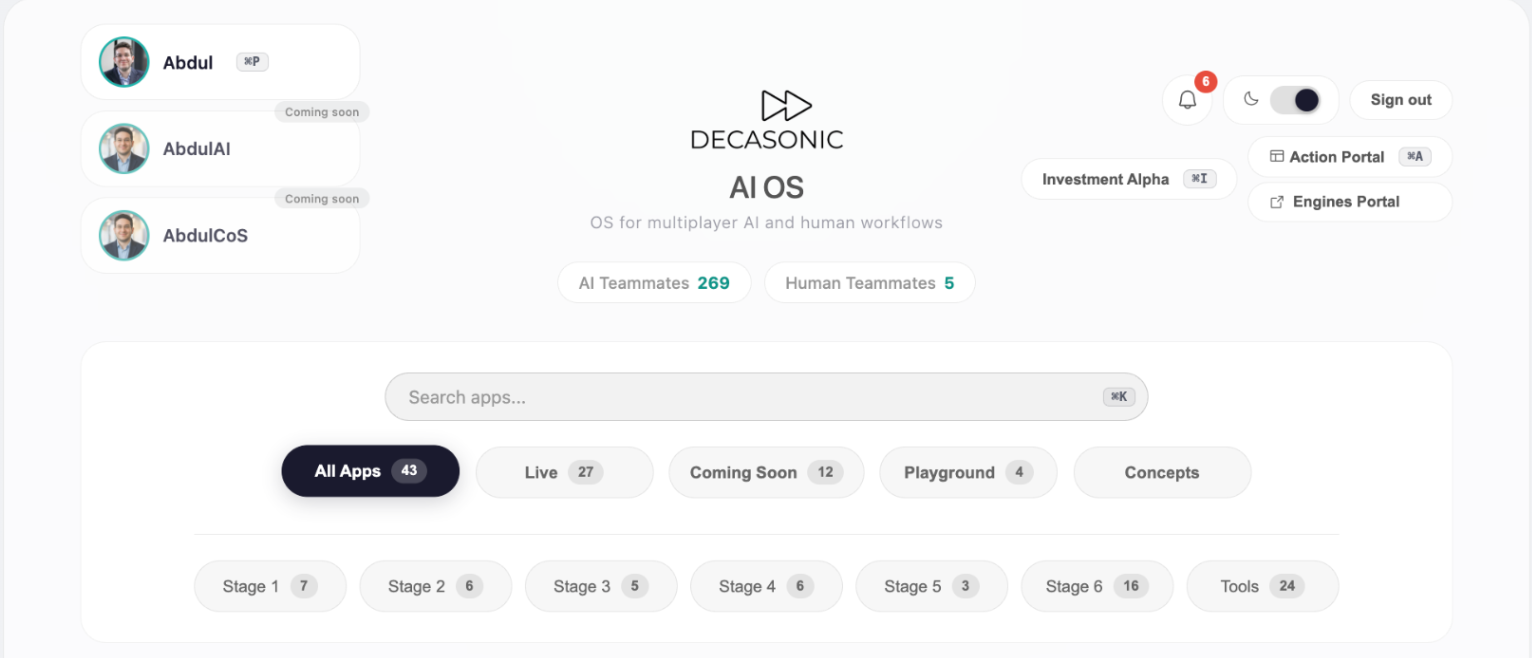
This is the transition from AI tools to AI systems. Our internal AI OS is a manifestation of the systems-thinking design applied for an AI-native venture fund. The OS represents a unified interface for multiplayer AI and human workflows. It is the orchestration of memory and context in specialized AI applications, with each AI application composed of a set of AI agents. Through a combination of systems-thinking and multiplayer AI as a core focus for development, we scaled the number of AI agents we developed internally to ~269.
Our AI apps answer questions. AI systems generate outcomes. AI teammates react and respond to instructions and market events. AI systems coordinate workflows, collaborate across functions, and improve continuously through reinforcement and shared memory. Over time, these systems become organizational infrastructure rather than productivity software.
More importantly, we built our AI systems during a moment where modern AI systems are beginning to reshape economic models themselves across a wide range of industries. Klarna deployed AI assistants that now handle 2.3 million customer conversations per month, reducing average resolution times from 11 minutes to under 2 minutes while driving an estimated $40 million in annual profit improvements. Block’s Square AI is embedding conversational AI directly into merchant payment infrastructure, accelerating the transition away from traditional per-seat SaaS pricing models toward usage-based monetization tied to actual AI consumption. Gartner projects this shift toward consumption-based AI pricing could account for nearly 40% of enterprise SaaS spend by 2030 as agents increasingly replace seats as the primary unit of economic value.
Our work reflects a broader structural shift where AI systems operate as interconnected economic participants capable of compounding effectiveness across multiple business functions simultaneously. The implications extend beyond software monetization alone. As AI agents become increasingly autonomous, they are beginning to assume characteristics traditionally reserved for human economic actors: persistent identity, delegated decision-making authority, capital allocation, and the ability to transact independently.
Stripe’s Machine Payments Protocol represents an early step toward enabling agents to pay for their own infrastructure and services autonomously, while x402 provides foundational payment rails and infrastructure for the emerging agentic economy. Together, these developments signal a transition from software as a productivity layer toward agents as native participants within digital economic systems, operating alongside humans rather than simply augmenting them.
Historically, software improved labor efficiency. AI-native systems are today reshaping how value is created, coordinated, and captured. Organizations are moving from linear human-driven workflows toward continuously operating systems where intelligence compounds across every interaction. Decision-making, customer engagement, financial operations, sourcing, research, and execution increasingly become interconnected systems of human and AI workflows.
Scale, therefore, begins to look different. Growth no longer requires proportional increases in headcount. Smaller teams equipped with collaborative AI systems can increasingly compete with much larger organizations because they operate with dramatically higher leverage, speed, and adaptability. This creates a new kind of company: system-heavy leaders that outcompete people-heavy incumbents. AI systems compound advantages. We’re seeing it at our firm.
At the same time, programmable financial infrastructure is changing how these AI systems transact and coordinate economically. Stablecoins, tokenized assets, on-chain settlement rails, and autonomous payment systems are creating always-on financial infrastructure that aligns naturally with continuously operating AI systems. Financial workflows that previously depended on fragmented intermediaries and delayed reconciliation are becoming programmable, real-time, and global by default.
This is one reason the intersection of Web3 and AI is increasingly important.
AI systems require identity, coordination, incentives, memory, and value transfer. Crypto networks increasingly provide the infrastructure layers that enable those functions to operate at internet scale. Stablecoins have already emerged as one of crypto’s first truly mainstream products because they solve immediate operational problems around liquidity movement, settlement, and treasury management. The next phase is likely to involve AI agents directly interacting with these financial systems autonomously.
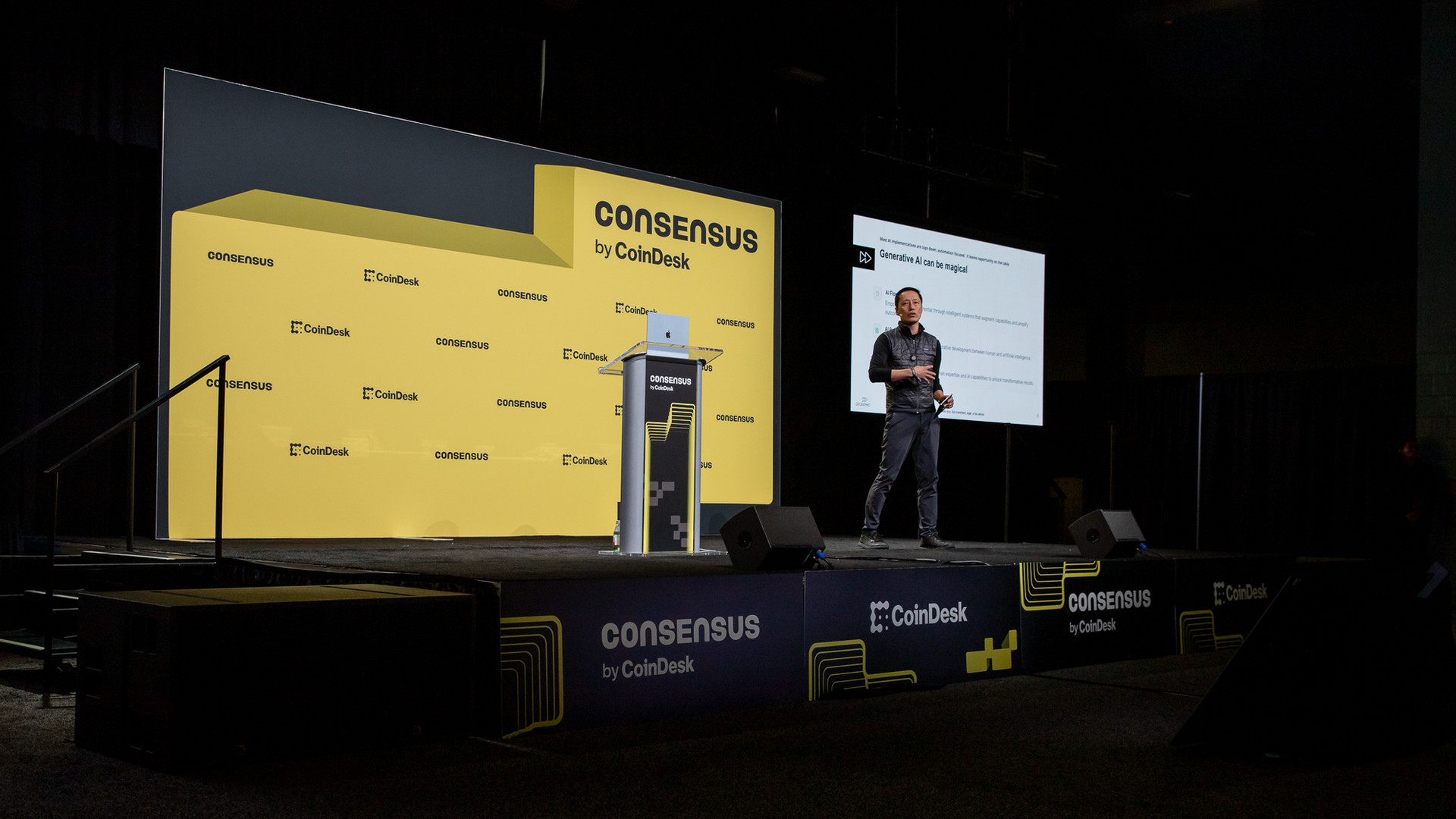
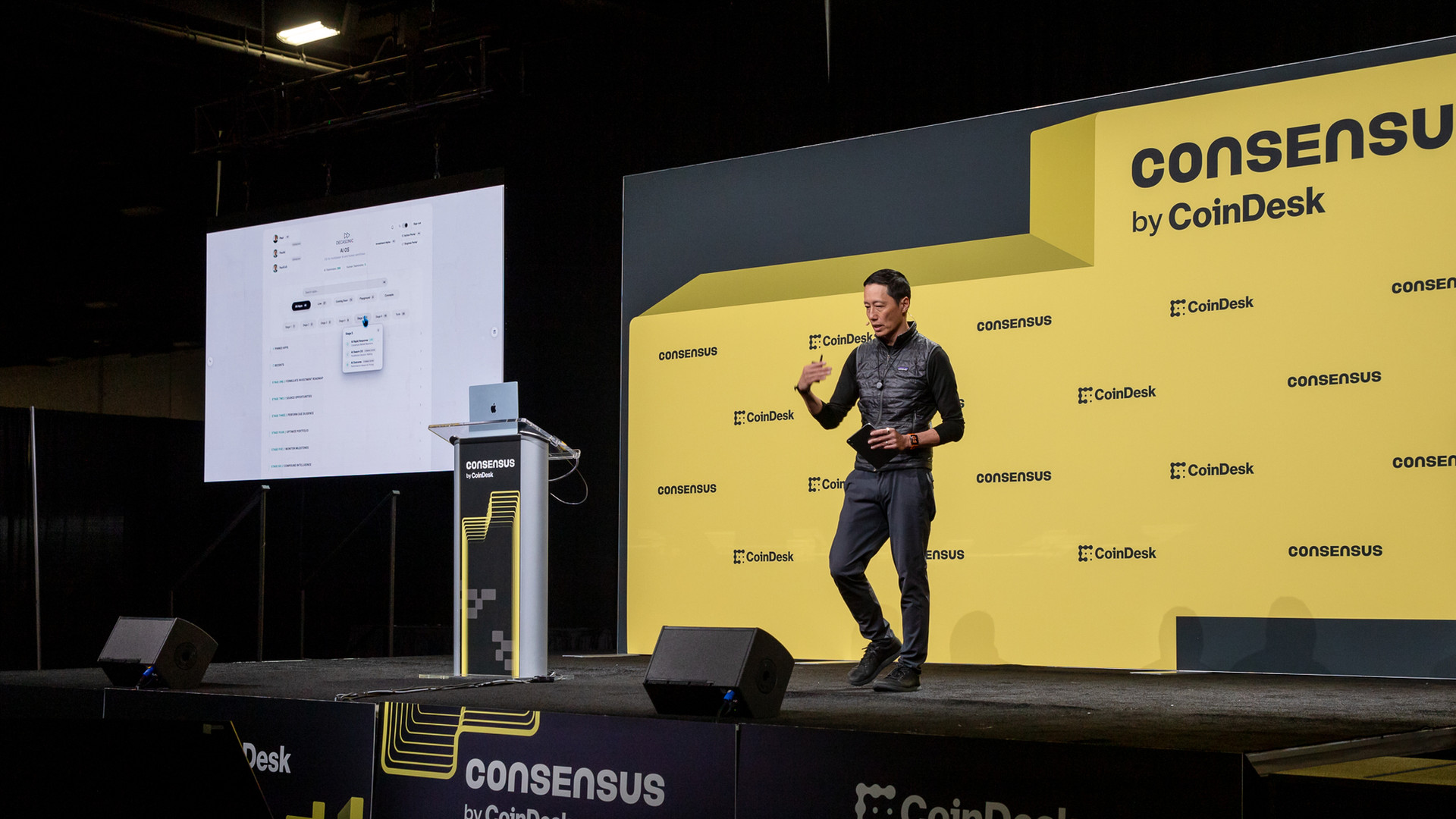
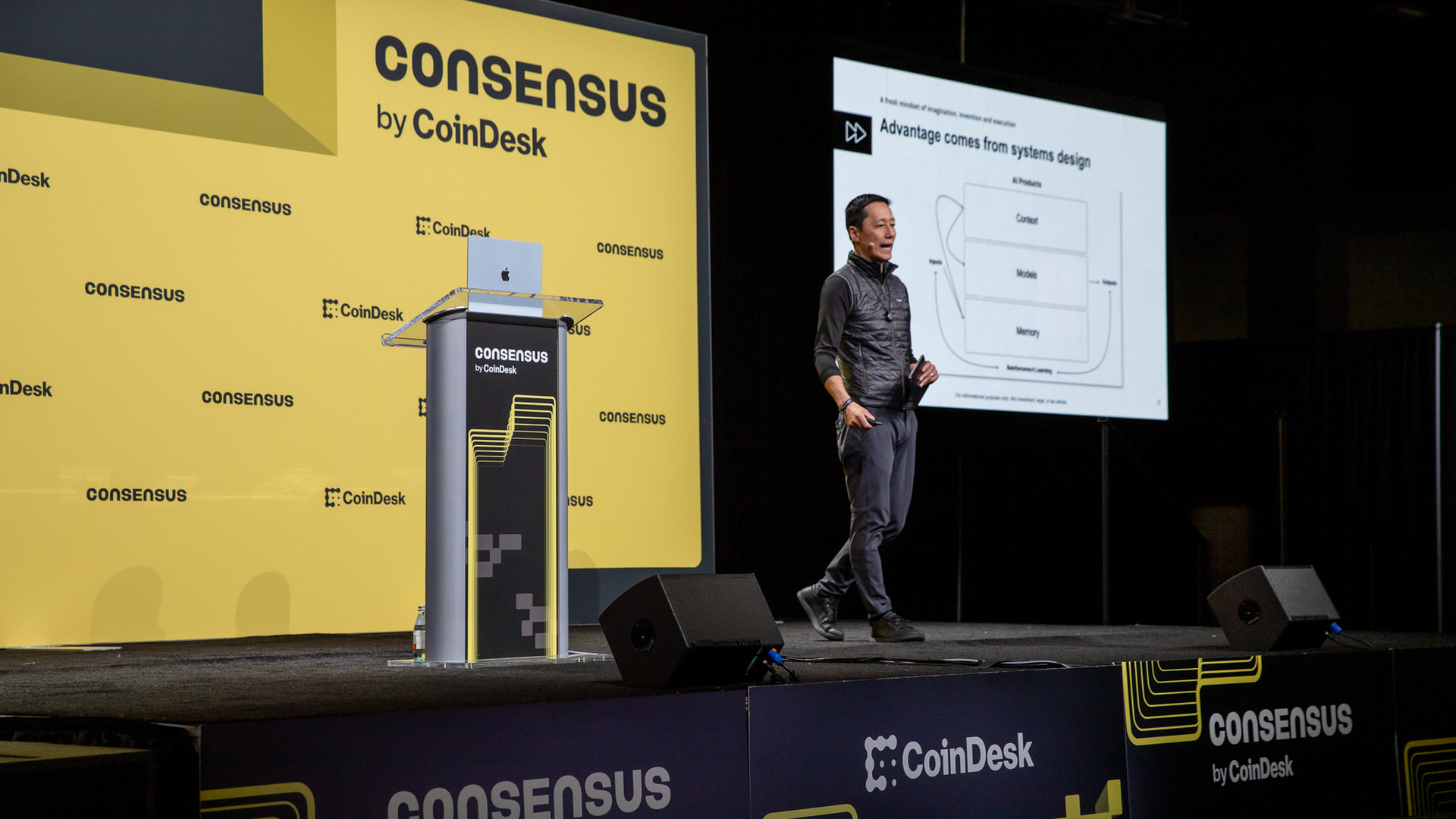
At this year’s Consensus 2026 Miami, I had the pleasure this year to present a workshop on how we are building our AI-Native venture firm, Decasonic, from our AI Operating System, AI Action Portal, RLEN, and AI Engines Portal.
At the conference, this convergence between AI systems, programmable finance, and institutional infrastructure was one of the clearest themes across the conference. Conversations increasingly centered around “agentic commerce,” where AI agents coordinate workflows, financial operations, and transactions continuously without requiring constant human intervention. Stablecoins, tokenization, AI orchestration, and institutional blockchain infrastructure dominated discussions far more than speculative narratives. The mood across founders, investors, and operators felt notably more mature: less focused on hype cycles and more focused on building durable systems for real economic activity.
Valuable adoption is here and will compound. Stablecoins accounted for ~$46T in transaction volume last year, approaching ACH volumes and surpassing both PayPal and Visa as global settlement layers in their own right. The stablecoin market cap value further continues to compound, reaching more than $323B as of the writing of this article, with B2B flows now accounting for roughly 60% of functional usage. The value of tokenized real-world assets is continuing the trajectory, with RWA AUM exceeding $30B and accelerating sharply after the passage of the GENIUS Act in July 2025, which finally established a federal framework for payment stablecoins and unlocked institutional issuance from names like JPMorgan, BlackRock, and Franklin Templeton. The second catalyst ahead is increasingly likely in the form of the CLARITY Act passing, with the Senate Banking Committee scheduling its markup for May 14 and the White House targeting July 4 for House passage, a timeline that would resolve the long-standing SEC/CFTC jurisdictional ambiguity that has kept capital on the sidelines.
The growth in payments protocols underwriting the agentic-commerce thesis is further moving into production. Stripe and Tempo recently released the "Machine Payments Protocol," as an open, internet-native standard for agents to accept MPP payments (March 18, 2026). MPP enables a standard for agents to coordinate payments programmatically, including microtransactions, recurring payments, and pay-per-use flows, enabling the coordination layer for agentic commerce. More than 100+ services were already listed in the MPP payments directory at launch, spanning model providers, compute platforms, and data services. As of the past ~30D, the protocol accounted for ~6,767 cumulative buyers interacting with ~112 cumulative service providers. Coinbase and Cloudflare's x402 protocol is converging on the same problem, with x402 crossing nearly ~$50M in cumulative transaction volume distributed across ~170M transactions, and MPP itself is backwards-compatible with x402, a signal that the agentic-payments stack is consolidating around shared primitives over fragmentation. The conversations on the ground are more structural, and backed by recent integrations and performance.
Several ideas and innovations stood out repeatedly throughout the event. AI agents are rapidly evolving from simple assistants into autonomous participants capable of sourcing information, evaluating opportunities, coordinating workflows, and eventually transacting economically. Institutions are accelerating adoption of tokenized infrastructure for collateral management, transfer-agent systems, and on-chain corporate actions. Stablecoins are increasingly viewed not as trading instruments but as programmable liquidity infrastructure. Meanwhile, advances in scalable blockchain infrastructure, reinforcement learning systems, and collaborative AI orchestration are creating the foundations for continuously operating digital economies. What felt different this year was that many of these concepts were no longer theoretical. It was clear many companies were presenting innovations that were productized, piloted, and integrated into real operational workflows.
At Decasonic, we have been building around this thesis internally by designing a product-first, AI-native operating model. Today, our systems include over 269 AI teammates orchestrated across over 28 workflows spanning investment sourcing, token diligence, market intelligence, portfolio support, and collaborative research. One sourcing workflow that previously required multiple investors working continuously for a week, a team of ~10 AI agents coordinated by agentic orchestrators, can now generate hundreds of qualified opportunities in under an hour through concurrent AI orchestration. Token diligence is a similar story: a process that once consumed roughly five hours of an analyst's workday is now completed in ~20 minutes by a team of 34 specialized agents, with significantly greater contextual depth and far broader source coverage than any individual analyst could realistically pull together. The compounding effect across workflows is where it gets interesting, sourcing feeds diligence, diligence feeds market intelligence, and market intelligence loops back into sourcing.
The important point is not the efficiency gain itself. Companies can only cut staff and automate so much before investors realize the opportunity afforded by AI augmentation and productivity. The important point is that the organization begins operating differently.
As AI systems mature, intelligence compounds across workflows. Outputs become more personalized and context-aware. Systems learn from prior interactions and reinforce successful patterns. Collaborative reasoning improves as multiple AI agents specialize around different functions or perspectives. Over time, these systems begin behaving less like software and more like continuously learning organizational teammates.
This also changes how leadership teams think about product design.
The next generation of category-defining companies will likely be built around systems design rather than standalone applications. Durable advantage will come from how effectively organizations integrate context, memory, models, workflows, and reinforcement into cohesive operating systems. Models themselves are rapidly commoditizing. The real differentiation increasingly comes from orchestration and product architecture. We ship AI products weekly and post our learnings both on LinkedIn but also on our website.
This is particularly important in AI-native and crypto-native environments, where competition is global, iteration cycles are compressed, and distribution advantages disappear quickly. In these markets, the companies that win are often the ones that learn and adapt the fastest. Systems that continuously improve create compounding organizational advantages that are difficult to replicate through traditional hiring or manual processes alone.
Another emerging dynamic is the convergence of physical and digital AI collaboration. AI systems are beginning to move beyond browser-based interactions and into embodied interfaces, robotics, and ambient operational environments. We previously mapped the landscape of Web3 x Physical AI here: link. As these systems mature, the boundary between digital workflows and physical workflows will continue to blur. The future of AI collaboration may feel less like opening a chatbot window and more like operating alongside persistent intelligent teammates embedded across the organization.
What becomes increasingly clear is that we are entering a dispersion cycle. Many companies will adopt AI. Far fewer will redesign how their organizations actually operate around AI-native systems. That gap will widen over time.
The companies that create durable advantages will use AI to manufacture transformative capabilities that compound continuously across their organizations. They will design workflows where intelligence improves over time, where systems collaborate autonomously, and where organizational learning becomes embedded directly into operational infrastructure.
Ultimately, agentic magic is about designing systems where extraordinary outcomes begin to feel normal. The companies that master that transition will not just move faster. They will fundamentally redefine how value is created, coordinated, and compounded in the AI era. If you are building at the intersection of Web3 x AI, and are actively seeking a value-add investor-operator partner, reach out to us at Decasonic.
The content of this material is strictly for informational and educational purposes only. It is not intended to constitute investment advice, nor should it be considered a recommendation or a solicitation to buy, sell, or hold any asset. Decasonic does not endorse investments in any specific tokens, and nothing in these blog posts should be construed as legal, tax, or financial advice. Please consult with a qualified professional advisor before making any financial decisions. Decasonic provides no warranties, whether expressed or implied, on the content provided in these blog posts, including its accuracy, completeness, or correctness. The opinions expressed here are those of the authors and do not necessarily reflect the views of Decasonic. Please note that Decasonic may hold a position in some of the tokens mentioned, including Virtuals. Decasonic is not liable for any errors or omissions in the content of this material or for any actions taken based on the information provided herein.