

in this piece
all perspectivesWe published our Q4 2026 thesis on October 5, the first day of SF Tech Week. By the end of the week, our conversations with frontier founders had shown that thesis playing out on the ground, and in several areas the shift is already accelerating.
Our view is that abundant intelligence creates an abundance of opportunities, and that value accrues to the companies that deliver and sustain differentiated experiences in emerging interfaces, digital and physical. At a16z Speedrun Demo Day, on our consumer AI panel, in our portfolio companies' offices, and in founder meetings at Third Coast Foundry, the same pattern kept showing up. The founders who stood out could show what their agent does for a customer, kept context on their users, or had a clear path to deployment.
If you take only four takeaways from this piece, the ones to remember are:
- Agents with measurable ROI are accelerating in customer adoption and investor funding. Customers buy agents whose results show up in their own numbers, and capital is following.
- Consumer agents work best with adaptive memory and shared context, across multiplayer use cases. The products we liked learn the user over time and are built for personal, professional, and play.
- Physical AI scales when data carries across machines, fleets, and environments. The robotics teams moving fastest reuse what they learn on one deployment in the next.
- Finance agents are becoming autonomous economic actors. Tokenized cash, instant settlement, and spending controls are letting agents hold and move money within set limits.
Agents With Measurable ROI Are Accelerating in Customer Adoption and Investor Funding
More than 70 companies pitched at Speedrun Demo Day, and most of them pitched an agent, from personal agents to vertical agents that automate enterprise work. In our one-on-one meetings with Speedrun founders afterward, the strongest traction came from agents that do measurable work for a business, such as running outbound sales or automating an operations workflow. Customers can see the result in pipeline, conversion, or hours saved, so these products close quickly and expand to more teams.
Capital is moving the same way. AI startups raised USD 102B in Q3 2026, 64% of all global venture funding, and a record 27 companies raised rounds of USD 1B or more (Crunchbase). The largest platforms are pushing agents into business software too: around the same time, OpenAI introduced always-on agents that keep working toward a user's goals between conversations, and Microsoft and Cisco expanded agents inside their products (AI Agent Store).
In our Q4 thesis we wrote that AI is accelerating product innovation, and that with more products competing for the same buyers, reaching customers becomes the constraint. Agents that bring in revenue or remove a cost the customer can measure are the first ones getting bought, and they are the ones raising.
A measurable result helps an agent get bought. The signal to target is what happens after the first deployment: whether usage grows inside the account and the customer adds more teams. We look for agent companies whose results show up in the customer's own numbers and whose revenue grows inside existing accounts.

Consumer Agents Work Best with Adaptive Memory and Shared Context, across Multiplayer Use Cases
On our consumer AI panel and in meetings with consumer founders through the week, the amount of creativity in consumer AI stood out. The agents that worked best adapt to the user over time. They draw on context people already have in their photos, inbox, and calendar, and get more useful the longer someone uses them. Many also work inside the channels people already use, like group chats and shared calendars, and are built for families, friends, and travel.
The large platforms kept pushing personal agents during the week. Meta brought Muse to iPad, TikTok released a shopping assistant with one-click checkout, and Instinct let its agent act inside group chats with people who have not signed up (AI Agent Store).
This builds on what we wrote in The Personal AI Inflection, that consumer AI is shifting toward persistent agents with context and agency. In our Q4 thesis we added that incumbents own consumer scale, so a new consumer product needs a specific reason for people to use it, and that we are focused on multiplayer experiences.
The large platforms will keep adding memory to their own assistants, so memory for one person is unlikely to be enough on its own unless it is across all aspects of their life. We are interested in agents whose memory is shared across a group, such as a household, a friend group, or a team. Context that spans several people is hard for a single-user assistant to recreate, and each new member makes the product more useful for everyone already in it.

Physical AI Scales When Data Carries Across Machines, Fleets, and Environments
In our robotics meetings, including a demo of a foundation model that picks up new manipulation tasks with very little new data, founders kept coming back to two questions: how fast a robot moves toward deployment, and whether data from one deployment makes the next one faster. More teams are training models on families of tasks so a robot can adapt to a new machine, site, or task with little new data. Customers who start with a pilot expand to more robots and more sites.
Capital is following. Robotics, aerospace, data centers, semiconductors, and energy each raised USD 10B or more in venture funding in Q3 2026, and AMD announced its intent to acquire World Labs, a builder of models for physical intelligence, for USD 8.2B (Crunchbase).
This matches what we wrote in our Q4 thesis and in The State of Physical AI: value accrues to the applications and interfaces that turn specialized models, hardware, and data into deployment at scale, including shared learnings across fleets. Evaluation and benchmarking are also part of that layer.
How the cost and time of each new deployment change matters. We ask how long the second and tenth deployments take compared with the first, and how much new data each one needs. When those numbers fall, data is carrying across machines, fleets, and environments, and the company can grow without rebuilding at every site.

Finance Agents Are Becoming Autonomous Economic Actors
The fintech conversations we heard showed AI and crypto rails coming together. A WisdomTree discussion covered how corporate treasuries and fintechs use tokenized money market funds, which give them yield, quick settlement, and the ability to use the fund as collateral. The market is growing. Tokenized US Treasury funds held about USD 14.88B onchain as of October 6, with WisdomTree's fund at USD 1.24B and JPMorgan's on-chain money market fund already at USD 678M.
The founders we met building agents that handle money put controls first: spending limits, approvals when an agent asks to exceed a limit, and audit trails. Personal finance agents are also emerging where consumer and fintech overlap.
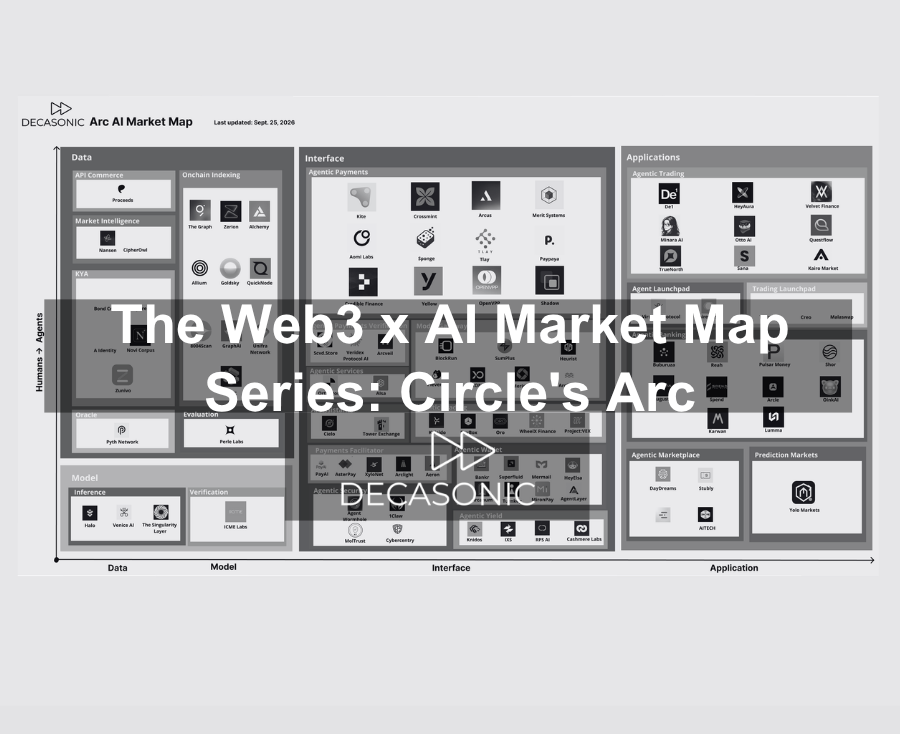
Our Q4 thesis said AI agents are becoming economic actors, that trading firms and active traders adopt first, and that we are focused on tokenized collateral and the identity and spend controls that let a firm trust an agent with money. Our market map of Circle's Arc points the same way for agentic finance. The treasury conversations suggest corporate finance teams and fintechs are next. Personal finance agents also fit Consumer AI, where we said AI should finish everyday tasks like budgeting, bills, and subscriptions in a few clicks.
Once an agent can hold yield-bearing tokenized cash, settle instantly, and act within limits a person or firm sets, it can run treasury and payment tasks without someone approving every step. What is interesting are the agents already doing useful financial work within those limits, and the identity and controls layer that lets firms trust them with more.

Partnering with the Frontier Ideas and Innovations
SF Tech Week supported the core of our Q4 thesis and showed where it is moving fastest. With most teams building on the same frontier models, the founders who stood out had measurable results for customers, memory and context on their users, or a process built around deployment and revenue.
Frontier ideas come from many places, and we look for them at accelerator demo days like Speedrun, at university hubs like Third Coast Foundry, and through our own network. We are following up with the founders we met, and we are still meeting teams across AI Interfaces, Consumer AI, Physical AI, and AI x Fintech. If you are building in one of these sectors and want a value-add, investor-operator partner, reach out to us at Decasonic.
The content of this material is strictly for informational and educational purposes only. It is not intended to constitute investment advice, nor should it be considered a recommendation or a solicitation to buy, sell, or hold any asset. Decasonic does not endorse investments in any specific tokens, and nothing in these blog posts should be construed as legal, tax, or financial advice. Please consult with a qualified professional advisor before making any financial decisions. Decasonic provides no warranties, whether expressed or implied, on the content provided in these blog posts, including its accuracy, completeness, or correctness. The opinions expressed here are those of the authors and do not necessarily reflect the views of Decasonic. Please note that Decasonic may hold a position in some of the tokens mentioned, including Virtuals. Decasonic is not liable for any errors or omissions in the content of this material or for any actions taken based on the information provided herein.