By Alejandro Ballesteros, Venture Investor, Decasonic
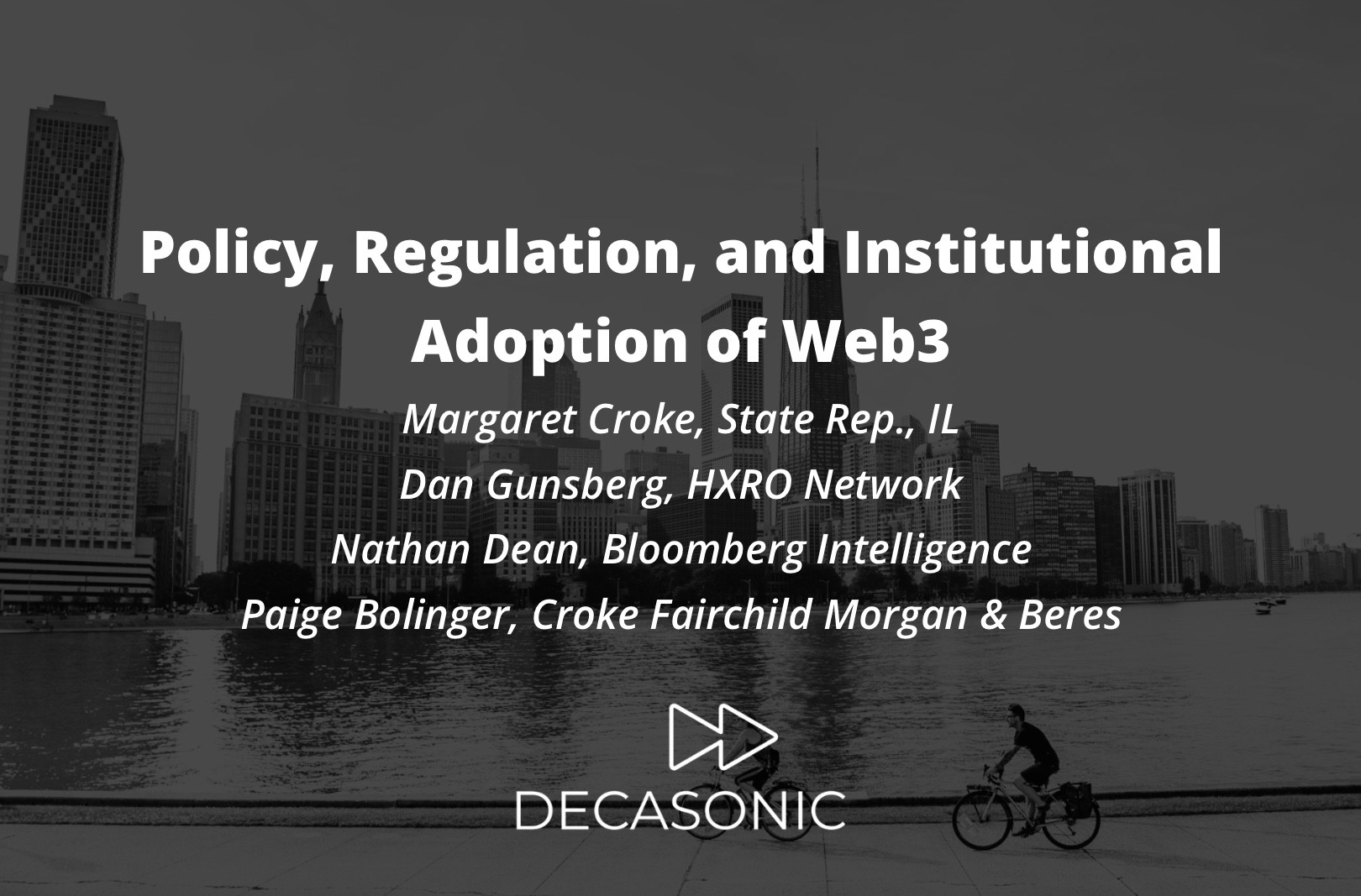
Policy, Regulation, and Institutional Adoption of Web3
Margaret Croke, Illinois State Representative; Dan Gunsberg, co-founder of HXRO Network; Nathan Dean, Senior Policy Analyst at Bloomberg Intelligence, and Paige Bolinger from Croke, Fairchild, Morgan & Beres had an enthralling conversation around Web3 regulation at Web3 Investor Day.
The State of Blockchain Regulation Today
The panel gave a lot of clarity on the current state of regulation, and what this means for the industry. Nathan Dean talked about how much of the conversation around regulation today is fixated on the 1933 Securities Law.
“There is a large debate of are tokens securities or not and does 1933 securities law apply? Chairman Gensler takes the view that 95-98% of the tokens out there are securities and therefore 1933 securities law applies.” -Nathan Dean
In Paige’s experience as a lawyer, a lot of the questions she gets are around this piece of legislation. Many times compliance with this law is such an important question to builders that they are really interested in finding a yes or no answer to whether their protocol or token is a security or a token. She clarified that, while it’s important to be pragmatic, this is not necessarily a black and white issue. This point sheds light on the diversity of digital assets that can be created with blockchains, and why that would naturally lead to a very complex and uncertain regulatory environment.
Dan Gunsberg alluded to the fact that there is simply too much focus on 1933 Securities Law relative to KYC and AML. He believes that the keeping bad actors out of current blockchain applications is something we don’t spend enough time discussing in today’s regulatory discussion, which is a shame because of blockchain’s unique ability to be digitally native and transparent which allows for us to vet the reputation of participants without having to compromise many aspects of their identity.
At Decasonic, we believe in responsible innovation. Responsible innovation of the sort that Dan alludes to here will be the guiding path to mainstream adoption. Innovation in KYC and AML protocols is something we are incredibly excited about that will encourage mainstream adoption as consumers feel that they are less at risk to exploits and bad actors.
The Way Forward
The way forward seems to be less black and white than shades of gray, as many panelists alluded to, which will require a lot of education and honest conversations between builders and policy makers.
“The tide has really changed. And I think that if we can just get ahead and talk about smart regulation and have these larger conversations with all the stakeholders, it's going to benefit the industry as well as consumers.” -Margaret Croke
Nathan and Dan alluded to the fact that blockchain regulation is not as much of a partisan issue as it is a generational issue. The blockchain industry certainly skews young and this generational education gap must be addressed. FTX and Coinbase are leading a lot of initiatives in Washington on this front and have been praised for their outreach.
The existing SEC ripple case and Coinbase insider trading DOJ investigation were unanimously agreed upon to be very large catalysts for further regulation in the digital asset sector:
“By this time next year, more likely than not, two out of those three catalysts will have gotten to a point where we know what the regulation is going to look like, it may not be implemented, but if you're a builder or an investor, you at least will have a 2 to 3 four year horizon that you know what the rules are.”
It is clear that the regulatory environment in the US is so uncertain that many participants would rather avoid entanglement in the US altogether. The panelists largely agreed that this is a huge loss for American technological innovation, and we need to combat this through increased forward guidance and collaboration from policymakers.
The content of this material is strictly for informational and educational purposes only. It is not intended to constitute investment advice, nor should it be considered a recommendation or a solicitation to buy, sell, or hold any asset. Decasonic does not endorse investments in any specific tokens, and nothing in these blog posts should be construed as legal, tax, or financial advice. Please consult with a qualified professional advisor before making any financial decisions. Decasonic provides no warranties, whether expressed or implied, on the content provided in these blog posts, including its accuracy, completeness, or correctness. The opinions expressed here are those of the authors and do not necessarily reflect the views of Decasonic. Please note that Decasonic may hold a position in some of the tokens mentioned, including Virtuals. Decasonic is not liable for any errors or omissions in the content of this material or for any actions taken based on the information provided herein.