
in this piece
all perspectivesBuilding together in the age of AI
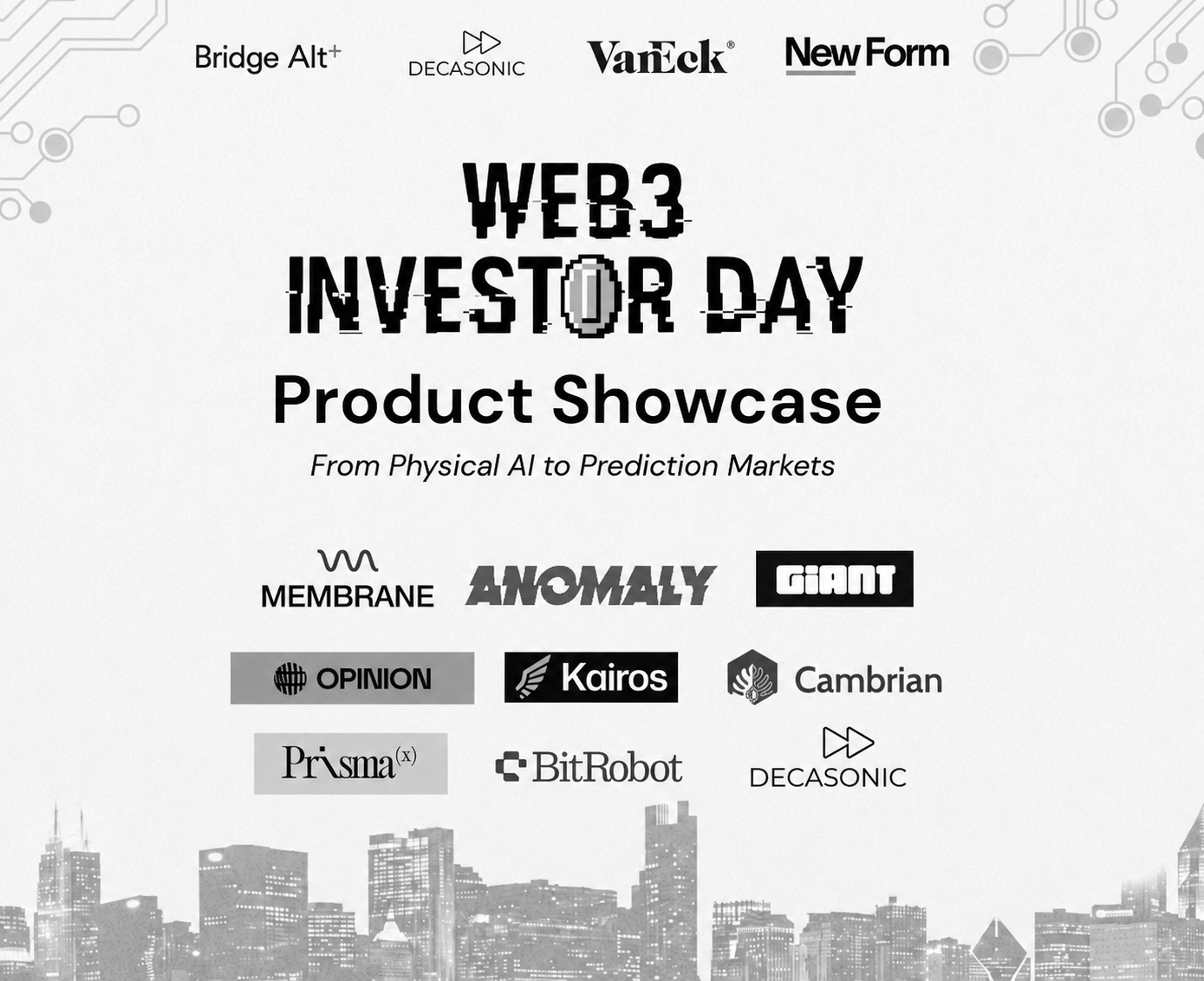
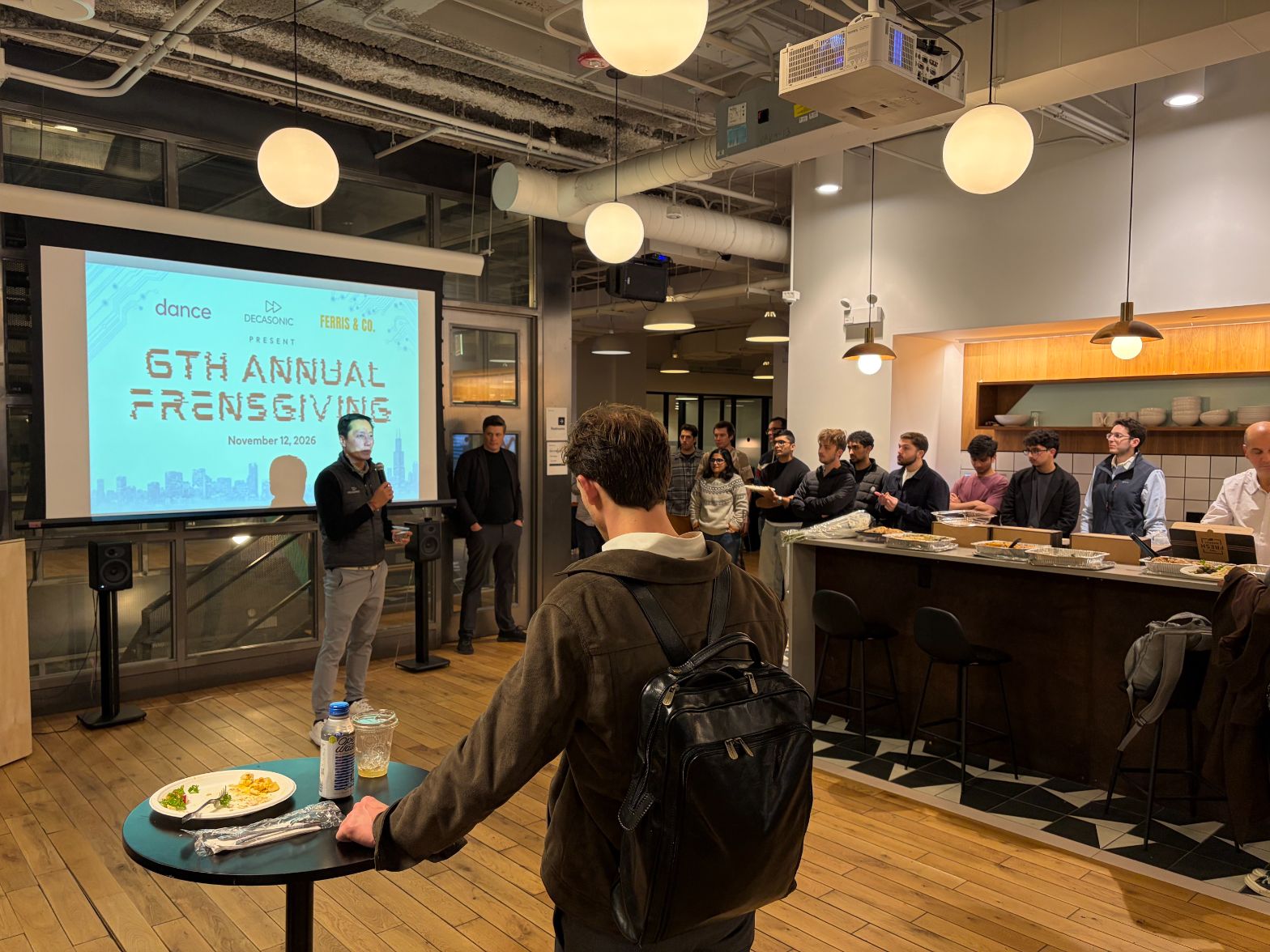
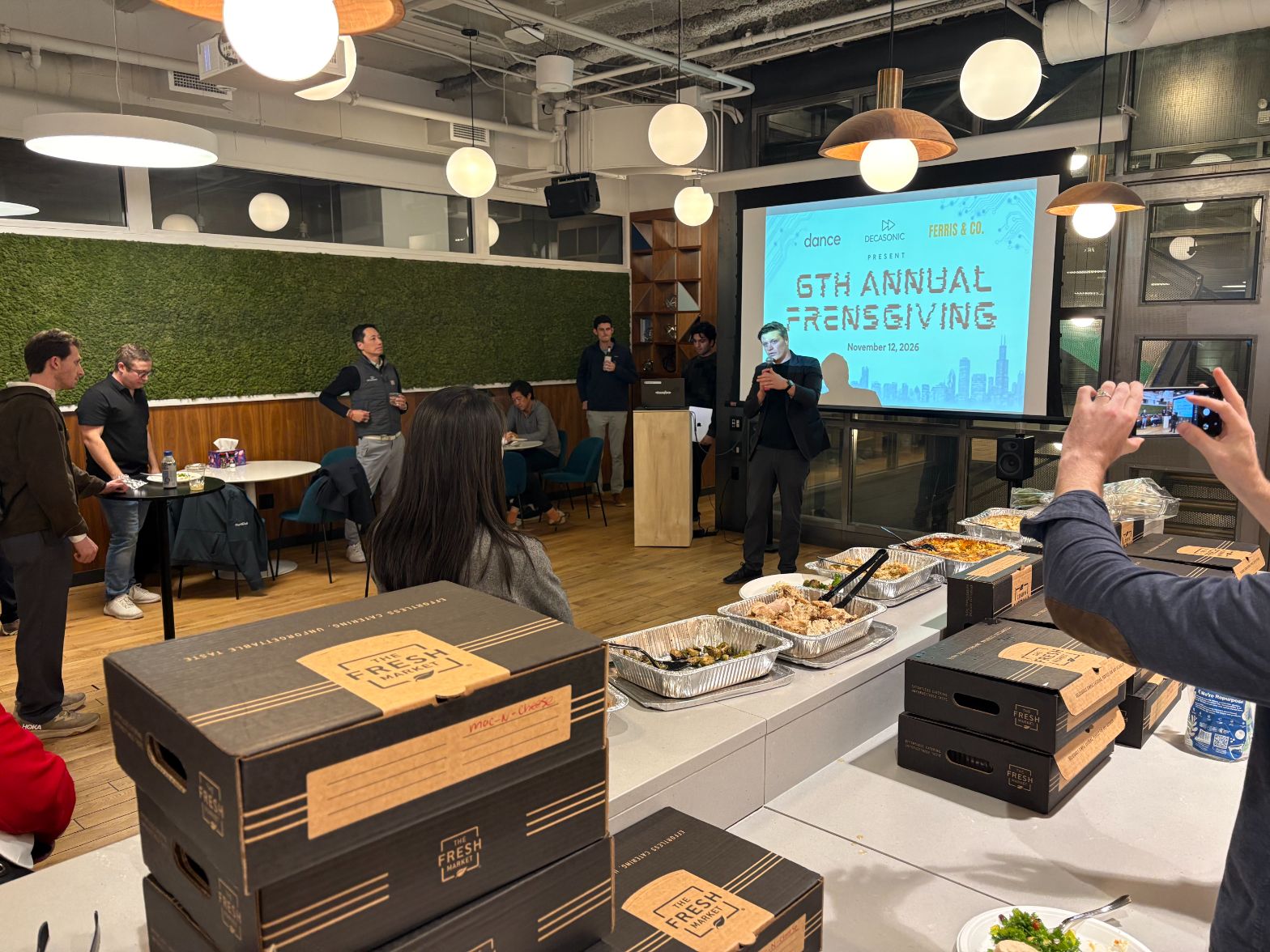
On November 12 we hosted our 6th annual Frensgiving in Chicago at Ferris & Co, co-hosted with Dance. The theme was Building Together in the Age of AI. AI makes it easier than ever to build something alone, which makes the people you build with matter more.
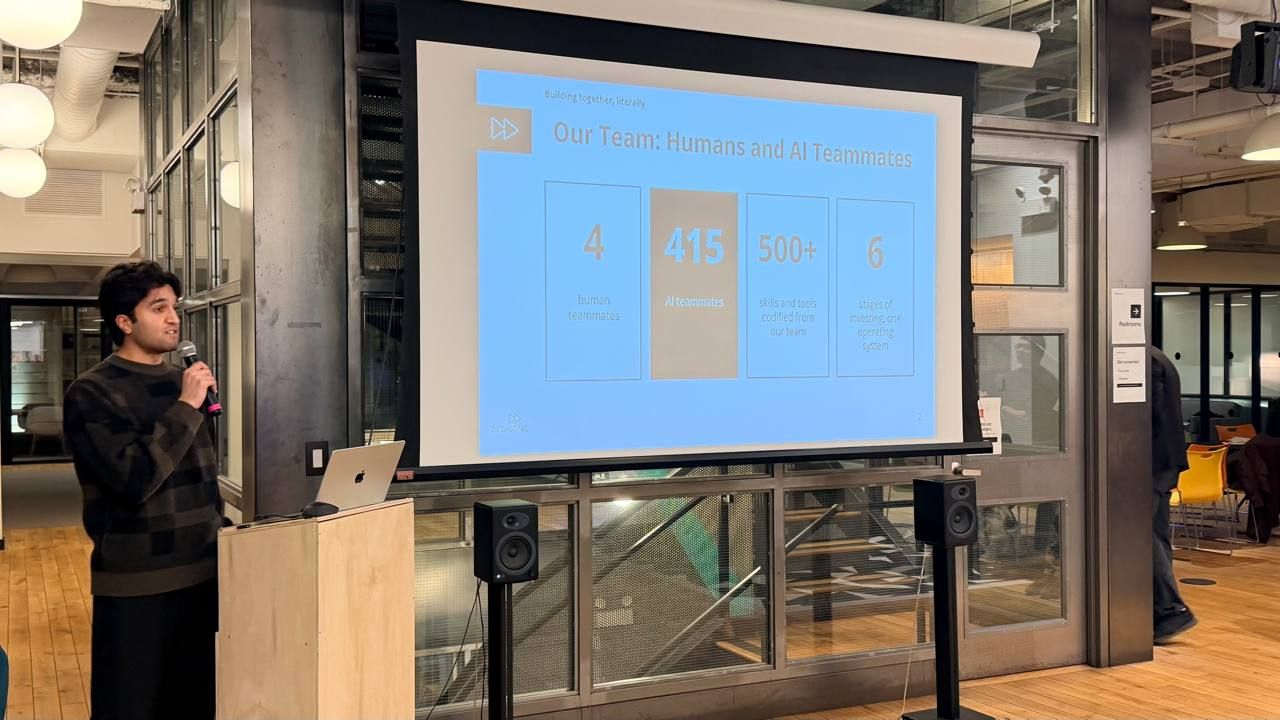
Close to 50 founders, investors, members of our community and people curious about AI came through. We gave a talk on the theme and demoed the AI OS we use to augment our work: a multiplayer room where several people work with the same agents, a morning brief that writes itself, a chief of staff that moves between desktop and phone, and memory that carries context from one session to the next.
For more from the night, see the recaps from Justin and Paul.
Those same capabilities are where consumer AI is heading. Over the past month the largest AI companies and a long list of new startups shipped their own versions of them. Going into Thanksgiving week, this post looks at what launched, which capabilities we think will separate consumer AI products going into 2027, and the new experiences they are starting to make possible.
What the big AI companies launched this fall
The largest AI companies all released agentic AI products this fall, AI agents that do tasks for people. Meta launched Muse on September 8. Instinct raised $1 billion at a $10 billion valuation on September 28 and was reported in late October to be raising again at $30 billion. OpenAI launched dots on September 29, which gives each agent its own cloud computer and browser. xAI released Grok Bot 1.0 on November 2, which can work inside Slack, Microsoft Teams and video calls. On November 10 Google added Gemini Intelligence to Pixel 10 and Motorola phones, so Gemini can order groceries, book rides and make calls for the user.
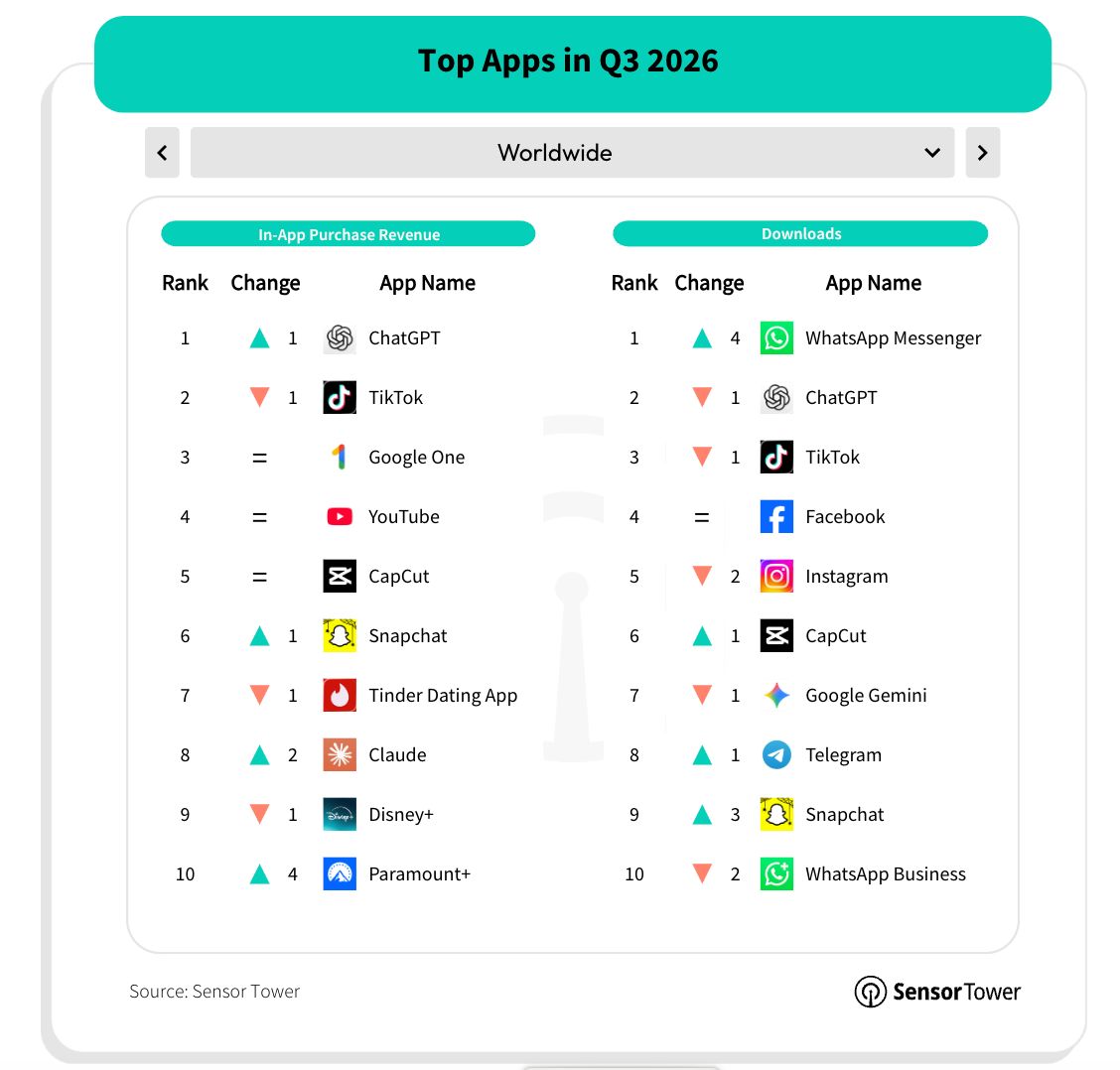
People are paying for AI. Sensor Tower ranked ChatGPT the top grossing app in the world in Q3 2026, ahead of TikTok for the first time. But a small group of people does most of the spending. In a16z's October Top 100 Gen AI Consumer Apps report, nearly half of US consumers said they use AI, only 25% use it every day, and the top 10% of spenders made up about half of all spending.
Our read: These AI personal assistants can already finish tasks, work over text and send a morning brief, and hundreds of millions of people use them. A startup that only offers the same things has to beat Meta, OpenAI and Google at getting users, which few can do. The startups we like most build things the big companies are not set up to build well.
Areas of Differentiated Experiences in Consumer AI Today
Since August we have met about 100+ consumer AI companies at the seed and Series A stage, and grouped them by what each one is building. Eight capabilities kept coming up across those conversations. Some are things the big AI companies are not built to do well. Others are about doing one thing better than a general assistant can. Under each one we list the signals we check when we meet a founder.
1. Time to magic
Time to magic is how quickly a new user gets a result that impresses them. A general assistant starts every new user with an empty chat box, so it is up to the user to figure out what to ask. A focused product can be designed around one great first result and deliver it in seconds or minutes, before the user loses interest. The founders we met who do this well get a new user to something real right away, like an app that already knows a user's tastes the first time they open it.
What we look for: How long it takes a new user to get their first result, how many clicks, and how many get there in their first session. Long sign-up forms lose most people before they see what the product can do.
2. Multiplayer
The big AI assistants are built for one person at a time, and their group features have mostly been add-ons. OpenAI phased out ChatGPT group chats in July, less than eight months after launch. We think the opening is in products designed around a group from the start: a household, a couple, a group of friends or a team. A product built for groups grows when people invite each other, which keeps the cost of getting each new user low. Once a group's tasks and history live in one place, it is hard for anyone to leave. Some founders are building multi-agent systems, where each person in a group has an agent and the agents coordinate with each other. Many of the consumer founders we met this fall are building this way, including household assistants, multiplayer productivity, and AI-native social networks.
What we look for: How much activity happens in groups, and how many new users join through an invite. Groups are easy to grow but hard to charge, so we also look for products that solve this in unique ways.
3. Co-creation and remixing
Multiplayer is people using a product together. Co-creation is people building on each other's work, where a game, story, song or app one person makes becomes the starting point for the next person. The product gets better as more people make things on it, which a general assistant can't match. What we see are the apps with the most usage had users make episodes, stories and games for each other. We expect the next step to be paying the people who make things, the way creators earn on video and gaming platforms today.
What we look for: How much time people spend on content made by other users, and how many creators earn money. Creators who get paid bring their own fans, which makes growth cheaper.
4. Emotive AI
Emotive AI is about how a product talks: its tone, voice and personality. The big companies design one assistant to be safe and useful for hundreds of millions of people, which tends to make them sound alike. A product built around one character for one audience, like an AI companion, can have a personality people want to come back to, and people pay for that. It is worth noting, products built on emotional connection also carry real risk, and the first wave of AI companion apps showed how quickly legal and regulatory costs can pile up.
5. Personalization and AI memory
Every major AI assistant now has AI memory, but each one keeps that memory inside its own apps, and moving it to another assistant is a one-time copy at best. We think people will want their AI memory and context somewhere they can control and can take with them, especially as it gets more valuable the longer they use AI. That opens room for products that let people own their information, run more of the AI on their own devices, and show clearly what they know. The opportunity we find most compelling is AI-powered personalization that makes other apps better, using context the user controls. General assistants and memory tools have a harder path.
What we look for: Products where people can see, delete and export what the product knows about them, and still come back. Third parties may own the content, but the user owns the workflow.
6. Predictive
Predictive means the product starts work before you ask, like a morning brief that writes itself, a bill flagged before it is due, or a plan that adjusts when something changes. Our own morning brief at Decasonic works this way. This works best when the product knows one person or household very well, which gives an edge to products built for a specific part of someone's life. One example we have seen is an AI personal assistant for households that has context on the family through chat or calendar and takes care of what comes up. Mistakes cost more when a product acts on its own, so these products need to know when to stop and ask.
What we look for: How often users accept tasks the agent started on its own, and how rarely it does something it shouldn't.
7. Generated at runtime
Generated at runtime means the product creates what the user sees while they use it: a game, a course, a show or an app made for that person on the spot. A general assistant writes text in a chat window. A product built for one format can create something people keep, come back to and share. We have met teams in AI gaming and interactive media generating sports leagues, stories and interactive shorts. People already pay for games, stories and media through in-app purchases and subscriptions, so the business models here are familiar.
What we look for: Results good enough that people share them, costs that fall as AI gets cheaper to run, and founders with gaming and consumer backgrounds who know how to run live content, pricing and moderation.
8. Trusted with money
Money is where agentic AI could save people the most time, and where people are the most careful. In a Salesforce survey, only 8% of consumers had let an AI agent buy something, and 73% were not ready to give one their card. In Visa's first Agentic Commerce Benchmark, AI models failed at shopping tasks 42.8% of the time. Several large banks have also restricted outside AI agents from customer accounts. The products moving fastest build trust in steps. First the agent only looks at accounts and helps people understand and plan. Then it acts within limits, inside a separate account or spending cap, with the user approving each step.
What we look for: Approval steps, spending limits, math users can check, and clear rules on who pays when an agent makes a mistake. Retail AI trading is the most dense area for this today. The best openings we see are financial planning that used to require paying an advisor, and shopping agents for buyers and brands that work across the stores and banks the big assistants don't control. Horizontal products that can plug into existing workflows across hundreds of interfaces. We track how many users go from letting the agent look to letting it act, and how often purchases get refunded or disputed.
What we are looking for in consumer AI
Consumer AI is one of the four sectors in our Q4 2026 thesis, and we underwrite every company on product market fit, narrative and execution. The products that excited us most this fall combined several of these capabilities, most often multiplayer or a fast time to magic.
We are also meeting more consumer founders whose customers are other companies' AI agents. Those agents need data, booking, payments or personal information to do things for people. A share of seed companies selling to agents, or to agents and people together, rose from about 11% to about 19% last quarter. We treat these as consumer companies when a person still benefits at the end.
Building together this Thanksgiving
Frensgiving reminded us how much of our work comes from the people around us. The consumer AI products we want to back carry that into software: agents that help groups plan, decide and get things done, and that people trust with their time and money.
Thank you to Dance and Ferris & Co for co-hosting, and to everyone who came out for our sixth year. If you are building in consumer AI, we would like to hear from you. Happy Thanksgiving from all of us at Decasonic.
The content of this material is strictly for informational and educational purposes only. It is not intended to constitute investment advice, nor should it be considered a recommendation or a solicitation to buy, sell, or hold any asset. Decasonic does not endorse investments in any specific tokens, and nothing in these blog posts should be construed as legal, tax, or financial advice. Please consult with a qualified professional advisor before making any financial decisions. Decasonic provides no warranties, whether expressed or implied, on the content provided in these blog posts, including its accuracy, completeness, or correctness. The opinions expressed here are those of the authors and do not necessarily reflect the views of Decasonic. Please note that Decasonic may hold a position in some of the tokens mentioned, including Virtuals. Decasonic is not liable for any errors or omissions in the content of this material or for any actions taken based on the information provided herein.